Snowbelly

Quick answer
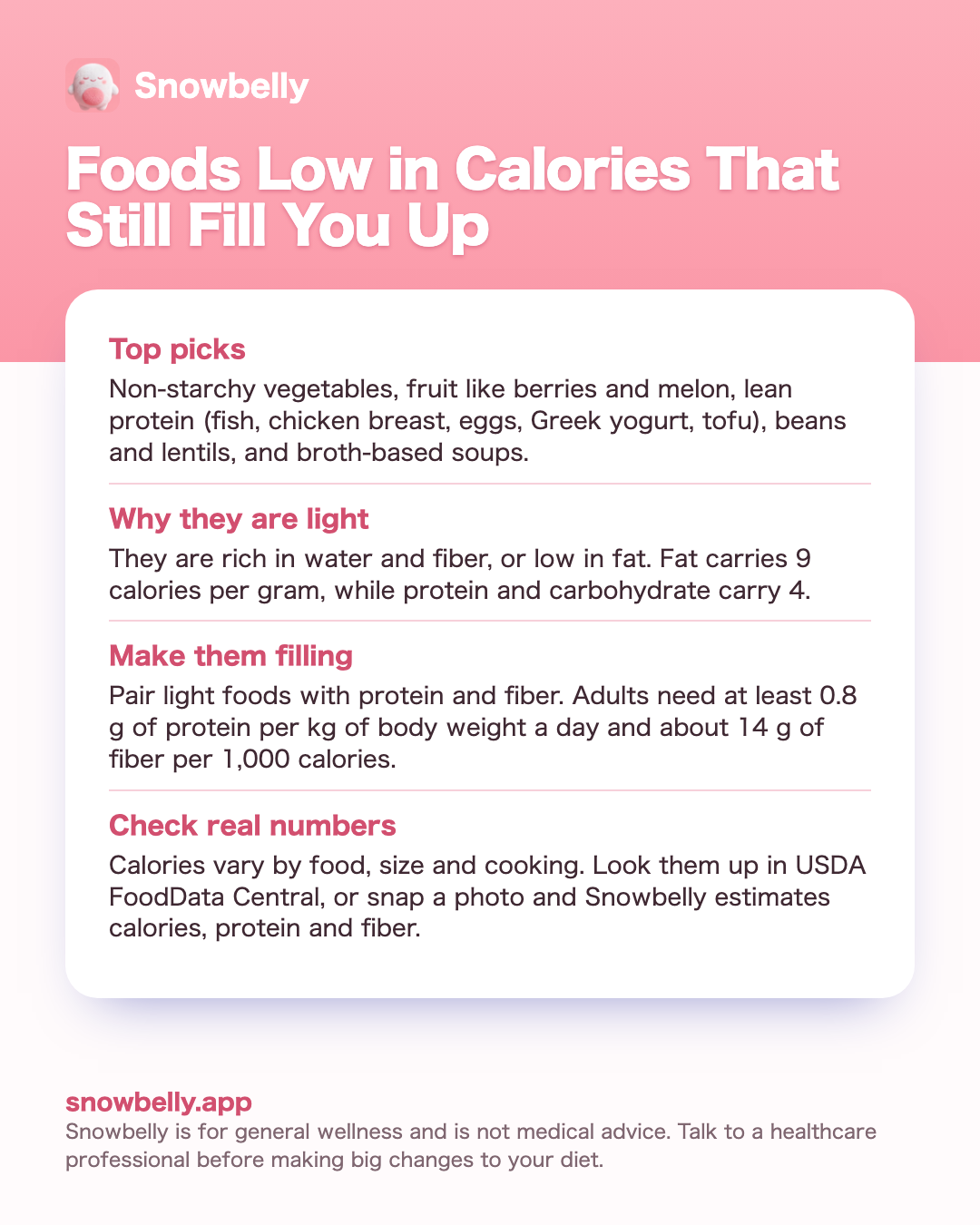
- Top picksNon-starchy vegetables, fruit like berries and melon, lean protein (fish, chicken breast, eggs, Greek yogurt, tofu), beans and lentils, and broth-based soups.
- Why they are lightThey are rich in water and fiber, or low in fat. Fat carries 9 calories per gram, while protein and carbohydrate carry 4.
- Make them fillingPair light foods with protein and fiber. Adults need at least 0.8 g of protein per kg of body weight a day and about 14 g of fiber per 1,000 calories.
- Check real numbersCalories vary by food, size and cooking. Look them up in USDA FoodData Central, or snap a photo and Snowbelly estimates calories, protein and fiber.

Best overall: Snowbelly
Knowing which foods are light is step one. Snowbelly helps with step two: seeing how they add up on your real plate. Snap a photo or type '2 eggs and toast' and Snowbelly counts calories, protein and fiber in seconds, and its Coach can suggest what to eat next to keep your day on track.
Free on the App StoreWhat makes foods low in calories
A food is low in calories when it gives you a lot of volume for very little energy. Nutrition experts call this energy density: how many calories sit in each bite. Three things mostly decide it.
- Water. Water adds weight and volume but no calories. Foods that are mostly water, like cucumber, lettuce, tomatoes, melon and broth, fill a bowl without filling your calorie budget.
- Fiber. Fiber adds bulk and gives you more to chew. Vegetables, fruit, beans and whole grains bring plenty of it.
- Fat. Fat carries 9 calories per gram. Protein and carbohydrate each carry 4, and alcohol carries 7. So foods with little fat tend to be lighter, gram for gram.
This is why a large bowl of vegetables can carry fewer calories than a much smaller pile of nuts or cheese. Neither one is a better food. Nuts bring healthy fats and travel well. Vegetables bring volume. Knowing the difference simply helps you choose what fits your day.
Low in calories does not mean low in nutrition. Many of the lightest foods are full of vitamins, minerals and fiber. And some richer foods, like olive oil, nuts, avocado or cheese, are worth keeping in your week. The goal is a mix that leaves you satisfied, not a list of foods to avoid.
One more note: calories for the same food change with size, variety and cooking method. For exact values, the trusted reference is USDA FoodData Central, a free database from the US Department of Agriculture. This guide sticks to food groups and patterns, so you can use it alongside any food list or label.
Low-calorie foods by food group
Here are the groups that tend to be lightest. Mix and match them. You do not need every item on the list.
Non-starchy vegetables. Leafy greens, spinach, lettuce, cucumber, zucchini, cabbage, celery, tomatoes, bell peppers, broccoli, cauliflower, green beans, asparagus and mushrooms. These are the classic volume foods. Roast them, fold them into eggs, or blend them into soups and sauces.
Fruit. Berries, watermelon, cantaloupe, oranges, grapefruit, apples, pears and kiwi. Whole fruit brings water and fiber along with its natural sweetness, so it works well as a snack or a simple dessert.
Lean protein. White fish, shrimp, skinless chicken or turkey breast, eggs and egg whites, plain nonfat Greek yogurt, cottage cheese, tofu and tempeh. Protein is not the lightest group bite for bite, but it is one of the most filling, so it earns its place on the plate. Our list of foods high in protein low in calories goes deeper.
Beans, lentils and peas. Black beans, chickpeas, lentils, split peas and edamame give you protein and fiber in one food. They are denser than lettuce, but a scoop goes a long way in a salad or bowl.
Broth-based soups. Vegetable soup, chicken and vegetable soup, miso soup or minestrone. Starting a meal with a bowl of broth soup is an easy way to add volume.
Whole grains, in comfortable portions. Oats, air-popped popcorn, brown rice, quinoa and whole-grain bread. Grains are more energy dense than vegetables, yet they add fiber and staying power. Popcorn is a favorite snack because it is light and airy.
Drinks. Water, sparkling water, and plain tea or coffee add little or nothing. Sweet drinks, juice and alcohol can add up quietly, because they are quick to sip.
Flavor boosters. Herbs, spices, mustard, salsa, vinegar, lemon and hot sauce add a lot of taste for very little energy. They make light foods feel like a real meal.
Pair low-calorie foods with protein and fiber
A plate of only cucumber will not carry you to dinner. Light foods work best when they share the plate with protein and fiber. Those two nutrients are the backbone of a meal that feels like enough.
Protein. The National Academies set the protein RDA for healthy adults at 0.8 g per kg of body weight per day, about 0.36 g per pound. That is a minimum, not a target. Someone who weighs 70 kg (about 154 pounds) needs at least 56 g a day. The acceptable range is 10-35% of calories from protein, so many people eat more than the minimum.
Fiber. The Institute of Medicine set the Adequate Intake at 14 g of fiber per 1,000 calories. That works out to about 25 g a day for women and 38 g for men aged 19-50, and 21 g and 30 g after 50. The average American eats about 17 g a day, so most of us have room to grow. Vegetables, fruit, beans and whole grains are where fiber lives, which is handy, because they are also some of the lightest foods around. Our guide on how much fiber per day explains more.
A simple way to build a plate:
- Fill about half with vegetables or a broth soup.
- Add a palm-size portion of lean protein.
- Add a fist-size portion of beans, whole grains or starchy vegetables.
- Finish with a little fat for flavor, like olive oil, avocado, nuts or cheese.
This is not a strict rule. It is a shape you can come back to when you are not sure what to eat. If you are adding a lot more fiber than usual, go slowly and drink water along the way so your stomach can adjust.
How low-calorie foods fit your daily calorie needs
Low-calorie foods are a tool, not a goal on their own. What matters is the whole day. The Dietary Guidelines for Americans estimate that adults aged 19-60 need about:
- Women: 1,600-2,000 calories a day if sedentary, 2,200-2,400 if active.
- Men: 2,200-2,600 calories a day if sedentary, 2,600-3,000 if active.
These are estimates. Your own needs depend on age, size and activity. A TDEE calculator uses the Mifflin-St Jeor equation to give you a personal starting point, and our guide on how many calories should I eat a day walks through the ranges.
If you want to lose weight, light foods make a gentle calorie deficit easier to live with. You can eat a full plate while taking in a bit less energy than you burn. The CDC notes that people who lose weight gradually and steadily, about 1 to 2 pounds a week, are more likely to keep it off.
A common rough estimate says about 3,500 calories equal one pound, so eating 500-1,000 fewer calories a day would mean 1-2 pounds a week. Real loss usually slows over time, which is why tools like the NIH Body Weight Planner model it more carefully. Treat the rule as a ballpark, not a promise.
Please do not use low-calorie foods to push your intake very low. Very low intakes are hard to keep up and are not something to try on your own. If you have a medical condition, are pregnant, or have a history of disordered eating, talk with a healthcare professional before changing how you eat.
Easy low-calorie swaps and meal ideas
You do not need a brand new menu. Small changes to meals you already like often do more than a whole new plan.
- Bulk up what you love. Add spinach or zucchini to pasta, extra peppers and onions to a burrito bowl, or mix cauliflower rice half and half with regular rice.
- Start with soup or salad. A bowl of broth soup or a big side salad before the main dish adds volume.
- Lighten the sauce, keep the flavor. Try salsa, mustard, lemon, herbs or a yogurt-based dressing. If you love olive oil, measure a spoon instead of pouring.
- Pick cooking methods that add less fat. Roast, grill, steam, bake or air-fry.
- Keep fruit in sight. A bowl of apples on the counter or berries at the front of the fridge are easy to grab.
- Sip simply. Choose water, sparkling water or unsweetened tea most of the time, and enjoy other drinks when you want them.
A few ideas to try this week:
- Breakfast: Greek yogurt with berries and a spoon of oats, or eggs scrambled with spinach and tomatoes.
- Lunch: A big salad with chicken or chickpeas, cucumber, peppers and a light dressing.
- Dinner: Baked fish with roasted broccoli and a scoop of brown rice, or a lentil and vegetable soup.
- Snacks: Air-popped popcorn, cottage cheese with fruit, edamame, or crunchy vegetables with hummus.
For more ideas, browse our high protein low cal snacks and high protein low calorie recipes. Eating out tonight? These healthy eating out options help you find light, filling picks on most menus.
Where low-calorie foods can trip you up
Light foods are great, but a few things can quietly add calories:
- Dressings, oils and sauces. At 9 calories per gram, fat adds up fast. A salad can become one of the richest dishes on the table once the dressing goes on. Keep it if you like it, just notice how much.
- Toppings. Cheese, croutons, bacon bits, candied nuts and crispy onions all count.
- Portions of denser foods. Beans, grains, dried fruit and granola are nourishing, and their portions grow easily.
- Drinks. Juice, smoothies, specialty coffee and alcohol can be large and easy to sip. Alcohol carries 7 calories per gram.
- Labels. Words like light or diet describe one thing, not the whole food. Check the serving size too.
There is also a mindset trap. Eating only the lightest foods can leave you hungry and thinking about food all day. For some people, that ends with feeling stuffed later. A more relaxed approach works for many people: mostly light, filling foods, plus the foods you love, in portions that fit. If you notice a pattern of eating past full, our guide on how to stop overeating has gentle ideas.
Finally, calories are hard to guess by eye. A bowl of pasta with vegetables and a drizzle of oil can look lighter than it is. A quick check with a picture calorie counter helps you learn your own portions over time, without weighing every bite.
Low-calorie food groups at a glance
Use this as a quick menu. For exact calories, look up your food and portion in USDA FoodData Central.
| Food group | Examples | What makes it light | Easy way to use it |
|---|---|---|---|
| Non-starchy vegetables | Spinach, lettuce, cucumber, zucchini, broccoli, peppers, mushrooms | Mostly water, plus fiber | Fill half your plate; add to eggs, pasta and soups |
| Fruit | Berries, melon, oranges, apples, kiwi | Water and fiber with natural sweetness | Snack, yogurt topping or simple dessert |
| Lean protein | White fish, shrimp, chicken breast, eggs, nonfat Greek yogurt, tofu | Little fat; protein carries 4 calories per gram | A palm-size portion at each meal |
| Beans and lentils | Black beans, chickpeas, lentils, edamame | Protein and fiber in one food | Salads, soups and bowls |
| Broth-based soups | Vegetable, minestrone, miso | Lots of water and volume | Start a meal with a bowl |
| Whole grains | Oats, air-popped popcorn, brown rice, quinoa | Fiber; popcorn is light and airy | A fist-size portion; popcorn as a snack |
| Flavor boosters | Herbs, spices, salsa, mustard, vinegar, lemon | Big taste, very little energy | Swap in for heavier sauces |
| Drinks | Water, sparkling water, plain tea or coffee | Little or no energy | Your everyday sip |
When eyeballing or a paper food diary is enough
For many people, that is enough. If you already eat plenty of vegetables, fruit and lean protein, and your weight and energy feel steady, you may not need to count anything. Using the plate shape above and eyeballing portions works well for a lot of everyday meals.
A notes app or a paper food diary is a nice middle step. Jotting down what you ate helps you spot patterns, like skipping lunch and feeling very hungry at night, or a dressing habit that adds more than you thought. It costs nothing and takes very little time.
These simple tools fit well when:
- You want general awareness, not totals.
- Your meals are fairly similar from day to day.
- You prefer not to think about numbers.
- You are just starting to notice how food makes you feel.
The limit is that calories are hard to guess by eye, and a paper list does not add anything up for you. You see what you ate, but not how it compares with your own calorie, protein and fiber needs.
When you need more than a list
- You have a weight goal and want to know whether your day fits a gentle calorie deficit.
- You want to see protein and fiber, not only calories, so your light meals also keep you full.
- Your meals change a lot, with eating out, mixed dishes and homemade recipes that are hard to estimate.
- You tend to lose track after a few days and want something quick, like a photo, to keep the habit going.
- You would like friendly ideas for what to eat next instead of figuring it out alone.
How to start counting low-calorie meals with Snowbelly
Get Snowbelly
Download Snowbelly for iPhone. It is free on the App Store and also works on iPad.
Set up your plan
Answer a few questions about your goal, age, height, weight and activity. Snowbelly builds a personal calorie, protein and fiber plan, in US or metric units.
Snap or type your meals
Snap a photo of your plate and Snowbelly counts calories, protein and fiber in seconds. You can also type it, like '2 eggs and toast', or use quick add with the fluffy ruler when you already know the number. Results are estimates.
Ask the Coach and try Recipes
Ask the Coach what to eat, how to handle a craving, or whether your day is on track. Tell Recipes what you are craving and get a lighter, high-protein version with big, easy steps, saved and searchable.
Keep it light and steady
The home screen widget shows your snowball and calories left, with one-tap logging. Weekly weigh-ins show progress toward your goal weight, and your streak includes one free snow day each week.
FAQ
What foods are lowest in calories?
Non-starchy vegetables are the lightest group. Think leafy greens, lettuce, cucumber, celery, zucchini, tomatoes, peppers and mushrooms. Broth-based soups, berries and melon are also light. Water, sparkling water and plain tea or coffee add little or nothing. For exact values by portion, look up the food in USDA FoodData Central.
What low-calorie foods keep you full the longest?
Foods that bring protein or fiber tend to be the most satisfying. Good picks include white fish, chicken breast, eggs, plain Greek yogurt, cottage cheese, tofu, beans, lentils, oats, vegetables and whole fruit. A plate that mixes vegetables with a lean protein and some fiber-rich carbs usually holds you longer than vegetables alone.
Can I lose weight just by eating low-calorie foods?
Low-calorie foods make a gentle calorie deficit easier, because you can eat a full plate for less energy. What decides weight change is your total intake over the day and week. The CDC notes that people who lose weight gradually and steadily, about 1 to 2 pounds a week, are more likely to keep it off.
Are low-calorie foods always healthy?
Not always. Low in calories and rich in nutrients are not the same thing. Vegetables, fruit, beans and lean protein are both light and nourishing. Some products labeled light or diet are low in calories but bring little else. A mix of whole foods, plus the foods you enjoy, is a kind way to eat.
Is fruit too sweet to count as a low-calorie food?
Whole fruit brings water and fiber along with its natural sugar, so many fruits are light and filling. Berries, melon, oranges, apples and kiwi are popular picks. Juice is less filling than whole fruit because the fiber is mostly gone and it is quick to drink.
How do I find the calories in a specific food?
The trusted free reference is USDA FoodData Central, run by the US Department of Agriculture. Packaged foods also list calories on the label, so check the serving size. If you want a faster way for whole meals, snap a photo and Snowbelly estimates calories, protein and fiber in seconds. Every result is an estimate.
How few calories is too few?
There is no single number for everyone. The Dietary Guidelines for Americans estimate that adult women need about 1,600-2,400 calories a day and adult men about 2,200-3,000, depending on activity. Do not use low-calorie foods to push your intake very low. Talk with a healthcare professional before big changes, especially with a medical condition, pregnancy or a history of disordered eating.
Bottom line
Foods low in calories are mostly the ones full of water, fiber and lean protein: vegetables, fruit, beans, fish, poultry, eggs, yogurt, tofu and broth soups. Build meals around them, add protein and fiber so you stay full, and keep room for the foods you love. For many people, eyeballing portions or a simple food diary is enough.
If you want to see how your plate adds up against your own calorie, protein and fiber plan, Snowbelly makes it quick: snap a photo and Snowbelly counts it. Every count is an estimate, and steady beats fast. This is general wellness information, not medical advice. Talk with a healthcare professional before big changes to how you eat, especially if you have a medical condition, are pregnant or have a history of an eating disorder.
Sources
- USDA FoodData Central
- Dietary Guidelines for Americans 2020-2025
- National Academies DRI (macronutrients)
- Academy of Nutrition and Dietetics fiber position
- CDC Steps for Losing Weight
Save this guide
Keep the key points as an image on your phone.
Snap your plate and see the total
Snowbelly counts calories, protein and fiber from a photo of your meal on the App Store.
Free on the App Store