Snowbelly

Quick answer
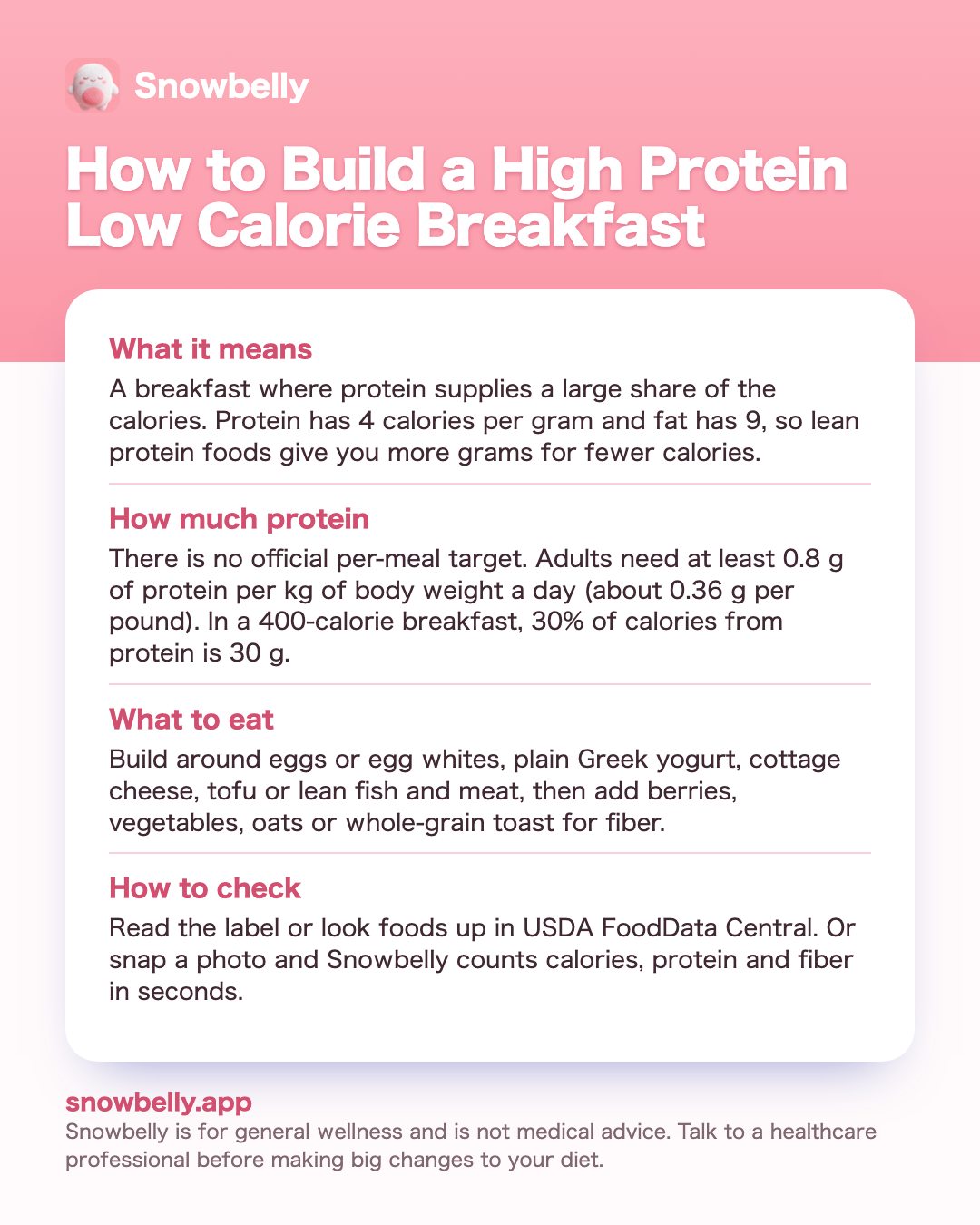
- What it meansA breakfast where protein supplies a large share of the calories. Protein has 4 calories per gram and fat has 9, so lean protein foods give you more grams for fewer calories.
- How much proteinThere is no official per-meal target. Adults need at least 0.8 g of protein per kg of body weight a day (about 0.36 g per pound). In a 400-calorie breakfast, 30% of calories from protein is 30 g.
- What to eatBuild around eggs or egg whites, plain Greek yogurt, cottage cheese, tofu or lean fish and meat, then add berries, vegetables, oats or whole-grain toast for fiber.
- How to checkRead the label or look foods up in USDA FoodData Central. Or snap a photo and Snowbelly counts calories, protein and fiber in seconds.

Best overall: Snowbelly
A breakfast can feel high protein until you see the numbers. Snap a photo of your plate or type "2 eggs and toast", and Snowbelly shows calories, protein and fiber in seconds, right next to your personal plan. Tell it what you are craving and you get a lighter, high-protein version, saved and searchable for tomorrow morning.
Free on the App StoreWhat makes a breakfast high protein and low calorie
There is no official definition, so it helps to think in shares instead of labels. A breakfast is high protein when protein supplies a big part of its calories. It is low calorie when it fits comfortably inside your daily plan and still leaves room for lunch, dinner and a snack.
The math behind it is simple. These are the standard energy values used for food labels and databases like USDA FoodData Central:
- Protein: 4 calories per gram
- Carbohydrate: 4 calories per gram
- Fat: 9 calories per gram
Because fat carries more than twice the calories per gram, foods that are mostly protein with little added fat give you more protein for each calorie. That is why lean choices like egg whites, plain Greek yogurt and cottage cheese show up on so many lists of foods high in protein low in calories.
This does not make fat or carbs a problem. A little olive oil, a slice of whole-grain toast or a handful of berries all belong on a balanced plate. The idea is only to let protein lead, then add the rest with intention.
Low calorie does not mean tiny. A breakfast that is too small can leave you hungry by mid-morning and make the rest of the day harder. The goal is a breakfast that feels satisfying, gives you a solid amount of protein and fits your numbers, not the smallest breakfast possible.
How much protein a high protein breakfast should have
Official guidance sets protein for the whole day, not for each meal. The National Academies set the Recommended Dietary Allowance for healthy adults at 0.8 g of protein per kg of body weight per day, about 0.36 g per pound. That number is a minimum, not a target. They also set an acceptable range of 10-35% of daily calories from protein.
Here is what the minimum looks like for a few body weights:
- 60 kg (about 132 lb): at least 48 g a day
- 70 kg (about 154 lb): at least 56 g a day
- 80 kg (about 176 lb): at least 64 g a day
Many people choose to eat more than the minimum while staying inside the 10-35% range, and they spread protein across meals so breakfast carries its share. The guide on how much protein should I eat a day walks through this in more detail, and a macro calculator can turn a percentage into grams for your own calorie level.
To turn a share into grams at breakfast, use the 4-calories-per-gram rule:
- Pick your breakfast calories, for example 400.
- Pick a protein share, for example 30%.
- Multiply: 400 × 0.30 = 120 calories from protein.
- Divide by 4: 120 ÷ 4 = 30 g of protein.
The table further down shows the same math for other breakfast sizes, so you can find a starting point without a calculator.
How many calories a low calorie breakfast should have
No source sets an official calorie number for breakfast. Start with your day, then decide how to split it. The Dietary Guidelines for Americans estimate daily needs for adults aged 19-60 at:
- Women: 1,600-2,000 calories if sedentary, 2,200-2,400 if active
- Men: 2,200-2,600 calories if sedentary, 2,600-3,000 if active
These are estimates. Your needs depend on your age, size and activity, so the guide on how many calories should I eat a day is a good place to find a closer starting point.
From there, the split is up to you. If your plan is 1,800 calories and you like three similar meals plus a snack, a breakfast around 400-500 calories leaves plenty of room. If you prefer a lighter morning and a bigger dinner, a smaller breakfast works too, as long as it still brings a good amount of protein. Some people like a bigger breakfast on active mornings and a lighter one on rest days. All of these can work.
If you are eating in a calorie deficit, keep it gentle. The CDC notes that people who lose weight gradually and steadily, about 1 to 2 pounds a week, are more likely to keep it off. A very small breakfast is not a shortcut, and very low calorie eating is not something to try on your own. If you have a medical condition, are pregnant, have a history of disordered eating or are planning a big change, talk with a healthcare professional first.
Building blocks for a high protein low calorie breakfast
You do not need special products. Most high protein breakfasts are built from a few familiar foods. Calorie and protein values vary by brand, portion and cooking method, so check the label or look the food up in USDA FoodData Central before you trust a number.
Protein anchors (pick one or two):
- Eggs, or eggs mixed with egg whites
- Plain Greek yogurt or skyr
- Cottage cheese
- Tofu, for a scramble or a savory bowl
- Smoked salmon, leftover chicken or turkey slices
- Milk or unsweetened soy milk in oats or a smoothie
- Beans or lentils, for a savory breakfast
Fiber partners (add one or two):
- Berries or other fruit
- Vegetables like spinach, tomatoes, peppers and mushrooms
- Oats or other whole grains
- Whole-grain toast or a whole-wheat wrap
- Beans, which bring protein and fiber together
Easy on the extras. Butter, oil, cheese, nut butter, granola and syrup can all be part of a good breakfast. They are calorie-dense, though, so a measured spoonful keeps the protein share high and the calories in line with your plan.
Fiber is the other half of a balanced breakfast, and most people fall short. The Institute of Medicine sets an Adequate Intake of 14 g of fiber per 1,000 calories, about 25 g a day for women and 38 g for men aged 19-50 (21 g and 30 g over 50), while the average US intake is around 17 g a day. At that rate, a 400-calorie breakfast would carry about 5.6 g of fiber. See how much fiber per day for the full picture.
High protein breakfast ideas you can make in minutes
These ideas follow the anchor-plus-partner pattern. Portions are up to you, so the exact numbers depend on how much you serve and which brands you buy.
- Veggie scramble: eggs and egg whites with spinach and tomatoes, whole-grain toast on the side.
- Yogurt bowl: plain Greek yogurt with berries and a small sprinkle of oats or nuts.
- Cottage cheese plate: sweet with fruit, or savory with tomato, cucumber and black pepper.
- Tofu scramble: crumbled tofu with peppers and onions, folded into a whole-wheat wrap.
- Overnight oats: oats soaked in milk or soy milk, stirred with Greek yogurt and topped with berries.
- Smoked salmon toast: whole-grain toast, a thin layer of cottage cheese, smoked salmon and cucumber.
- Breakfast wrap: eggs, black beans and salsa in a whole-wheat tortilla.
- Leftover bowl: last night's chicken or beans with an egg and a handful of greens.
A few habits make these easier on busy mornings. Cook a batch of eggs or tofu ahead, portion yogurt into containers, and keep washed berries and chopped vegetables in the fridge. Breakfast then takes a few minutes to assemble.
Want more variety? Browse high protein low calorie recipes for full meals, and if mornings are rushed, high protein low cal snacks can bridge the gap until lunch. In Snowbelly, you can tell it what you are craving, say pancakes or a breakfast sandwich, and get a lighter, high-protein version with big easy steps. Every recipe is saved and searchable, so your favorite breakfast is easy to find again.
Why breakfast numbers are estimates, and how to check them
Two breakfasts that look alike can land in different places. A splash of oil in the pan, a bigger scoop of yogurt or a heavier pour of granola can shift the calories more than you might expect, mostly because fat has 9 calories per gram. Labels and databases help, but every number is an estimate.
A few ways to check:
- Read the nutrition label and compare the serving size with what is on your plate.
- Look up single foods in USDA FoodData Central.
- Weigh or measure a few times to train your eye, then go back to eyeballing.
- Use a picture calorie counter: snap a photo and Snowbelly estimates calories, protein and fiber in seconds. If you already know the number from a label, quick add it with the fluffy ruler.
If protein is your main focus, a protein tracker app shows how breakfast adds up against your daily goal, so you can see early whether lunch or dinner needs to carry a little more. Seeing breakfast in context is often more useful than chasing a perfect number for one meal.
Breakfast protein math: grams by calorie share
Protein has 4 calories per gram, so you can turn any share of a breakfast's calories into grams. The 10-35% protein range is set for a whole day, not a single meal; this table only shows the math. The last column applies the fiber guideline of 14 g per 1,000 calories. Numbers are rounded.
| Breakfast calories | 20% from protein | 30% from protein | 35% from protein | Fiber at 14 g per 1,000 cal |
|---|---|---|---|---|
| 300 | 15 g | about 23 g | about 26 g | about 4.2 g |
| 400 | 20 g | 30 g | 35 g | about 5.6 g |
| 500 | 25 g | about 38 g | about 44 g | 7 g |
| 600 | 30 g | 45 g | about 53 g | about 8.4 g |
When eyeballing or a notes app is enough
You do not need an app to eat a good high protein breakfast. For many people that is enough: a few go-to breakfasts, learned once from the labels, then repeated most mornings.
Eyeballing works well when your breakfasts are steady. If you eat the same yogurt bowl or the same scramble five days a week, check the numbers once with labels or USDA FoodData Central, note roughly how much protein it gives you, and move on. A notes app or a paper food diary is also a fine way to jot down what you ate and spot patterns over a week.
These simple tools are kind, cheap and private to you. Their limit is time. Every new breakfast means another lookup, mixed dishes are hard to break down, and protein and fiber usually get skipped because adding them up by hand takes effort.
When you might want more help
- Your breakfasts change most days, and looking up each one takes longer than eating it.
- You want to see protein and fiber next to calories, not just a rough guess.
- You are working toward a goal and want breakfast to line up with a personal calorie, protein and fiber plan.
- You often eat breakfast out or on the go, where there is no label to read.
- A notes app starts to feel like homework, and a gentle reminder, a streak or a friendly coach would help you keep going.
How to start counting breakfast with Snowbelly
Set up your plan
Download Snowbelly on the App Store, and enter your goal, age, height, weight and activity. You get a personal calorie, protein and fiber plan.
Snap or type your breakfast
Snap a photo of your plate, or type it, like "2 eggs and toast". Snowbelly counts calories, protein and fiber in seconds. Use quick add with the fluffy ruler when you already know the number.
Ask for a lighter version
Craving pancakes or a breakfast burrito? Tell Snowbelly and get a lighter, high-protein version with big easy steps. Every recipe is saved and searchable for tomorrow.
Check in with the coach
Ask the coach what to eat next or whether your day is on track. It knows your numbers, keeps things practical and never shames.
Keep it easy
Log from the home screen widget, set reminders and keep your streak, with one free snow day each week. Your snowball is happy when you eat well and gets sleepy if you forget to log.
FAQ
What is a good high protein low calorie breakfast?
A good one pairs a protein anchor with a fiber partner and goes easy on calorie-dense extras. Examples: a veggie scramble made with eggs and egg whites plus whole-grain toast, a plain Greek yogurt bowl with berries, cottage cheese with fruit, or a tofu scramble in a whole-wheat wrap. Check labels or USDA FoodData Central for the numbers, since brands and portions vary.
How much protein should I eat at breakfast?
There is no official per-meal number. Healthy adults need at least 0.8 g of protein per kg of body weight a day (about 0.36 g per pound), and protein can supply 10-35% of daily calories. Many people spread protein across meals. As an example, if 30% of a 400-calorie breakfast comes from protein, that is 30 g.
How many calories should a low calorie breakfast have?
No source sets a breakfast number. Start with your daily needs, which the Dietary Guidelines estimate at 1,600-2,400 calories for adult women and 2,200-3,000 for adult men depending on activity, then split the day in a way you enjoy. On an 1,800-calorie plan with three similar meals and a snack, a breakfast around 400-500 calories leaves plenty of room.
Are eggs a good high protein breakfast?
Eggs are one of the most familiar protein anchors, and mixing whole eggs with egg whites is a common way to raise the protein share. The cooking fat matters too: oil and butter have 9 calories per gram, so a measured amount keeps things lighter. Add vegetables and whole-grain toast for fiber, and look up exact values in USDA FoodData Central.
What is a high protein breakfast without eggs?
Plenty of options skip eggs: plain Greek yogurt or skyr with berries, cottage cheese with fruit or tomatoes, a tofu scramble, smoked salmon on whole-grain toast, overnight oats made with milk or soy milk and stirred with yogurt, or a savory bowl with beans or lentils.
Does a high protein breakfast help with weight loss?
Weight change follows your calories over days and weeks, not one meal. A protein-forward breakfast can make it easier to meet your protein needs while staying inside your plan, but no breakfast guarantees results. The CDC notes that losing about 1 to 2 pounds a week is more likely to last. If you have a medical condition or plan a big change, talk with a healthcare professional.
Is it okay to skip breakfast?
That is a personal choice. What matters for your plan is your total calories, protein and fiber across the day. If you skip breakfast, make sure lunch, dinner and snacks still cover your protein and fiber. If you eat it, a high protein breakfast is an easy way to get a head start.
The bottom line
A high protein low calorie breakfast is less about special foods and more about simple shares: let protein lead, add fiber from fruit, vegetables or whole grains, and go easy on calorie-dense extras. Use the 4-calories-per-gram rule to turn a share into grams, keep your breakfast inside a daily plan that fits your age, size and activity, and aim for a steady pace rather than the smallest meal possible.
If your breakfasts are steady, labels and a notes app may be all you need. If they change often, or you want calories, protein and fiber in one place, snap a photo and Snowbelly counts it in seconds. This is general wellness information, not medical advice. If you have a medical condition, are pregnant or are planning a big change to how you eat, check in with a healthcare professional first.
Sources
- National Academies DRI (macronutrients)
- Academy of Nutrition and Dietetics fiber position
- Dietary Guidelines for Americans 2020-2025
- CDC Steps for Losing Weight
- USDA FoodData Central
Save this guide
Keep the key points as an image on your phone.
Snap your breakfast, see the protein
Snowbelly is on the App Store, so snap or type your first breakfast and see calories, protein and fiber in seconds.
Free on the App Store